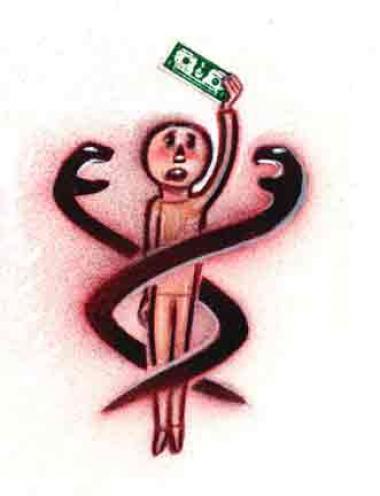
Profit and Health Care don’t mix

“For-profit” – means you maximize profits and stakeholder value.  It means it is about the money.

You charge the most you can.  And you keep profits high.

Less regulation – you don’t lower costs, you make more profits.

More customers – you don’t lower costs, you make more profits.

Competition – well, what or who are you really competing with?

Doctors – supply is limited.  Why should the good ones reduce their costs?  They don’t have to.  You would only lower your prices if you had excess capacity.  But you don’t.   So you won’t.

Hospitals – A lot of fixed overhead required.  So it costs a certain amount to run a hospital.  If fewer people can afford to pay, and you have to write off bad debt, you need to make it up somewhere – so you might raise prices.  But there is no reason to lower prices.

Insurance companies – you would only lower costs if you can keep a decent profit margin and gain more profitable business.  CBO said the premiums would be lower BECAUSE MORE SICK PEOPLE WILL HAVE TO GO WITHOUT COVERAGE.  Since people who buy coverage will use less of it, you could charge less.  But with the ACA repealed,  you don’t have to.  There is no motivation for insurance companies to lower prices when the risk mix if healthier.  Why should they?  If people are paying the rates they charge now, and profit margins are thin, why not keep the profits if the costs of those that you insure go down?  That is what insurance companies did BEFORE ACA.

A plausible example – A drug company makes good profits on a patented drug that, once prescribed, is taken for the rest of the person’s life.  They can charge whatever the market will tolerate – and if the alternative is death or suffering, people will pay.  The company is working on an enhancement and will get it nearly ready for approval.  They will delay release until the patent on their current drug is ready to expire.  That way, they can keep a monopoly on the drug and closeout competition.  They notice a medical device start up has a device that would cure the condition and eliminate the need for their drug.  While the device is being approved, the drug company buys the start-up.  They continue until the patent is in place.  Then the drug company puts release on hold.  The ‘forever’ drugs are remain profitable.  The device never makes it to market.

The Opioid challenge is fueled by routine prescribing of Opioid’s for pain despite the risk of addiction.  Alternatives are available.  But drug companies have created a protocol of Opoids being routinely provided for possible pain – not just real pain.  What motivation is there to stop this practice in a for-profit model?   Opioid addiction is bad for people – but not for the companies that profit from it.

THAT is for-profit health care.

What if the focus was on caring for everyone?  What if the incentives shifted from profit to quality of care and quality of life?

You could run research centers that focus on finding cures.

You could run rural health centers focused on providing care.

You could build out mobile health care models for handling the homeless.

You could ensure that the focus was on prevention and invest in public school health education on lifestyle choices that impact health.

You could develop support systems for people who require care assistance on a prolonged basis.

And the profit margins can be used to expand the capacity to care for people.

This could all be possible…..

If you believed in providing health care for all.

If you understand that no one wants the cheapest care if it isn’t the best care.

If you cared about people instead of profits or corporations.
Bring the jobs 1st – that could reduce Medicaid costs while leaving the safety net in place

Listening to the sales pitch, it seems that we should all stop worrying about direct cuts to Medicaid members because the jobs are coming in part 2 and those jobs will be good paying, include health benefits and reduce the need for Medicaid

So bring on the jobs.

If the jobs arrive, you can lower the spend while leaving the safety net in place.  Just in case.

Only jobs that either include benefits OR pay a living wage will reduce the need for Medicaid.  So bring them on 1st.

Because I am seeing some layoffs of good-paying jobs in the near future.

Laws / regulations are planned to eliminate a large part of the EPA, Department of Energy, Department of Education, and most of the Department of Labor. The State Department is full of vacancies that are going unfilled.   All will cost us good-paying jobs with benefits.

And most small business jobs do not include health care and often do not pay enough to let workers afford to pay for it themselves.

And when you replace public schools with charter schools, pay and benefits for teachers are reduced.

And when you refuse to require the infrastructure investments like pipelines to buy American-made materials, you give tax dollars to foreign countries and their workers.  And you cost US jobs.

So dear Republicans – show us your plan to immediately produce good paying jobs.

Because granting corporations tax breaks and removing regulations does not have a record of producing more good paying jobs that are given to the Americans currently out of work.

and no Part 2 promises.  The cost of all those lies is that we have no reason to trust you.

Humans need health care… not an option

The government doesn’t force you to buy health insurance – being human does. Otherwise, you risk suffering and dying or leaving a lot of debt to your family and to others.
 
Why should access to essential health care be impacted by how much you earn?
 
Couldn’t we better produce a health care system – especially for rural areas – if we started with the premise that access to essential health care shouldn’t be a factor of how much you earn?
 
I could invest in the infrastructure that delivers high-speed broadband network to all areas of our country. This can enable mobile / remove medical centers.
 
i could create a model where those that want to have a government healthcare job could choose to go to school for free and then work for a period of time where they are assigned.
 
I could create innovation labs where researchers on new and improved treatments could work together to produce ideas that would be delivered to all.
 
I could remove the cost of providing profits as part of health care costs.
 
If I wanted to fix the health care problem, I could do a lot of things.
 
But if I believe that you have to earn health care and that only profits drive acceptable services, then I am ok if those with less have nothing.
 
Because they aren’t worthy
 
Because it they were, they would have money.
 
It depends on what your human values are
 
My values state – if you are human you have already earned the right to essential health care.
 

They start with help the rich and the powerful….

The non-negotiable aspects of the ‘replace’ part of health care include some key points that will not bode well for most people

  • The rich no longer have to pay into Medicare [why is this a good thing?] while everyone else still does.
  • Corporations no longer have to promise to minimize profits on health insurance [profits drive companies to cover only the sick, include high deductibles, refuse to sell to ‘risky’ people, and add cost while reducing coverage]
  • Subsidies will move away from helping those with limited financial resources to helping older people more
  • Medicaid expansion will end – and responsibility will move to the states without the funding behind it

Hmmmmmm

The changes will drive competition – but is health care really a place for for-profit motivations?

If you own the rights to a treatment, drug or cure, wouldn’t a for-profit model drive you to charge as much as possible?  If you can charge $1,000,000 a treatment instead of $100, you can make the same amount of money with one patient as you would with 10,000 patients.  And business knows your margins are best when the cost / transaction is low.

If your life is on the line, do you shop for the cheapest or the best care if you can afford both?

Mergers were growing – which reduce competition – and there were no provisions that discouraged mergers.

And the companies that pulled out of the Health Exchange did so because they couldn’t find a way to make enough profits.  It wasn’t because the people didn’t buy their products.  It was because people bought their products and used them.

And the cost for doctors and hospitals go up by a lot if they have to deal with collecting money and writing off bad debt.  That emergency room care is the least efficient, most expensive way to get non-emergency care. People who think it is free because they can’t turn you away don’t really understand how it works.  To get care, you sign paperwork promising to pay the bills.  If you don’t, the hospital can come after you.  And they can sell your debt to debt collectors.  The ‘cost’ of uninsured and under-insured patients is like the cost of shoplifting in retail.  To stay in business, others must cover the cost of those that can’t pay for services.  Which means costs go up for all.

And doctors can’t practice their best medicine if their patients can’t afford treatments.

Perhaps the real issue with the ‘repeal’ is that it is being crafted by people who firmly believe that only a for-profit, ‘free-market’ system works.

But how ‘free’ is the market if your options are to buy or die?

The proposed changes are great for the already well off.  They get more tax help for the coverage they can already afford, they get better tax breaks for hiding money in Health Savings Accounts so that they can use it for medical care, pass it along to their heirs, and avoid ever paying taxes on this money.  And they can go back to getting Medicare for free – not having to pay in while they earn millions and get a capped insurance premium once they are eligible.  Great for them.

But for the rest of us, it keeps us in a model where we need great health care but can’t really afford it.  Even if we don’t buy an iPhone……

The sales pitch will go into full force.  They hope to scare or cajole you into going along.

They will claim they have a mandate to do this.

That is the biggest lie.  The President ran on NOT doing what the proposed bill does – reduce care and increase cost and hurt Medicare and Medicaid.  More people voted for democrats, 3rd parties or opted to sit this one out than voted for replublicans.

And they are pushing this through quickly.  Because most of us are catching on to what a very very very bad deal this repeal thing really s.

They had 8 years and the reason they have no plan is that they don’t believe that you should get ANY help buying insurance.  You should be on your own.  This is the 1st step in getting rid of Medicare and Social Security, programs they have never liked.

When you start with helping those who don’t need help, you are signaling your real intentions.  Which is to take a bit for yourself, and screw the rest of us.  All under the banner of ‘conservative values’.

Well I value life, liberty and the pursuit of happiness for ALL.  And that means I think we need to find a way where we focus on how to provide quality care for all – without consideration for how much they can pay.  Because when it comes to providing health care, equal should mean equal.

MLR and what losing it means

MLR is another hidden gem within ACA.   It stands for Medical Loss Ratio.

It was added by  Senator Al Franken of Minnesota.  Its purpose is to set boundaries on the amount of money an insurance company can keep for administrative costs including profits.

It means that if the people that the insurance company insures don’t use very many services, the insurance company may have to refund some money to the people that paid premiums because they aren’t allowed to make too much profit.

This made sense because the ACA also made people buy health insurance or pay a penalty. Without some regulation like the MLR, the insurance companies could increase their rates and increase their profits.

Another rule meant that companies that offered policies on the Health Exchange could not charge a different amount for the same product if sold anywhere else and could not deny coverage to anyone that applied.

Other rules removed the ability of insurance companies to charge people more based on gender or medical conditions.

Before the ACA some companies would price their products so that anyone other than young healthy people would shop somewhere else. Since healthy people used less services and companies didn’t have to make sure wellness services were covered without first having to meet the deductible, some companies made lots of profits for these policies.

The policies did not provide very good coverage but they were good for business.

Part of the reason that insurance companies are pulling off the Exchanges is because they can’t make the kind of profits.

Repeal / Replace removes all those corporate regulations.

And people who need coverage get hurt.  And insurance companies go back to being in control and able to set policies to maximize profits not providing health benefits.

Insurance is intended to share risk.  The best model is one that has everyone in one large risk pool.  This is what Medicare does – and why it is the most efficient health insurance plan in place today.  This is what single-payer would do.

Competition and for-profit models actually don’t work well in insurance models.  The only thing insurance companies can compete with is negotiating lower costs to deliver benefits [possible only when an insurance company has enough members to be able to negotiate discounts] or reducing their profit margins.  Since all insurance involves some amount of risk, companies cannot survive if their risk margin is too small.

High-risk corridors were put in place for the ACA to help prevent insurance companies from facing losses if they happened to have a lot of people who all needed more care than those covered by other policies.  The ACA had a model to share risk across private companies – and to set up high-risk corridors where some portion of premiums would be shifted across companies if some companies had more risk that others.

But Congress went back on the promise to fund high-risk corridors.  And this made insurance companies lose money -because they already took on the risk.  And this made them pull out of the Health Exchanges.  Sort of a self-inflicted death-spiral

All of this stuff is complicated.

Removing regulations in the ACA will return us to a time when for-profit insurance companies had the power.

How is this better for most of us?

Ask your representatives why they think this is a good deal.  Start with asking if they even understand it.   Because they aren’t passing laws like they understand the consequences.


It’s Simple – why shouldn’t the top 2% pay into Medicare?

Form 8960 – did you have to fill this out when you did your taxes?

Probably not.  This form details the Net Investment Income tax added as part of the ACA.  For the 1st time, this applied a tax to Net Investment Income that would go toward Medicare.

Why is this important?  Because many high-wage income earners do not earn income through self-employed or payroll-based formats.  That means their income is not subject to payroll taxes.  And Payroll taxes are how most of us fund Social Security and Medicare.

But what if you earn all your money through a trust fund or through investments?

Well before the ACA you didn’t have to pay into Medicare while you were working – AND you got the benefits of Medicare including the premium cap that sets a maximum limit on the premiums paid.  That premium cap means the more you make, the lower % of your income is paid into Medicare Premium.

Sounds like a win-win, right?  For those in the top 2%, it sure is. Now many could have avoided this tax by not taking their income – or putting off transactions that might trigger income just to avoid the taxes.

But some people do still earn a lot through payroll taxes, right?  Well the Additional Medicare Tax had those people who earn more than 97% of us pay some additional tax into Medicare as well.  [They had to complete Form 8959]

When the ACA is repealed and replaced, these two taxes go away.

And Medicare loses funding.  And it is weakened.  And it will be pronounced to be in a death spiral and the proposal will be whipped out that privatizes Medicare making it a voucher system helping the rich even more – and hurting the very people Medicare was created to protect.

WHY IS THIS OK?

Why is it fair to have the top 2% pay LESS for public services?

Why can’t we  have a simple law that puts these taxes in place to fund Medicare and separate this from the mucking about with the ACA?

And let all of our elected officials go on the record as to why they think the top 2% should benefit from Medicare without paying anything into it while working:?

Better yet, how about asking every one of them to disclose how they will personally benefit from the elimination of this tax….

Creating a listening space

It is easy to aim all of our frustrations at our elected officials.

Who really feels that their elected officials truly represent them?

Few people are happy about our current state of politics.  Being unhappy with the status quo is different from making things better.

But this is politics- and it involves a diverse group of people.  Not everyone can get their way.  Sometimes, we have to accept the undesirable to get the more important desirable things we want.  This is part of being an adult.

If you are an elected official, how do you really ‘represent’ your constituents?  How do you know what they want as well as what they need?  How do  you now what they are willing to ‘pay’ [in time, energy, resources and lost opportunities] to get what they want?

I think  elected officials need to listen.  But how do you really listen to hundreds of thousands of people?

Listening is tricky.  Because we, as humans, don’t really hear the words that others speak.  We hear the stories we make up about what we ‘heard’ [what our senses picked up].  This is why you can have a person say something to a group and the group will disagree about what was said.

And if you are an elected official, you can’t talk with everyone you represent.  But you are forced to talk with those that you need help from – which includes those that you need to fund your campaigns.  Without another option, elected officials just might think the people they talk to to get help funding their campaigns are the same as the people they are supposed to represent.

Candidates could try to find things out with polls, but those are imperfect at best.

Why put the burden on the elected officials or those considering running for office?

Why can’t we citizens create listening spaces?  These could be Forums where citizens get together and discuss issues and concerns in a group setting.  A place where there is real dialogue about the issues and about what could possibly be done to fix things.  A place where the consequences of change can be talked about as well – what are we willing to give and what are we willing to lose to get change.

Elected officials or those running for office could come to these forums and listen.  It would give them a chance to watch their ‘bosses’ [remember they were supposed to work for us citizens, right?] and see what they care about.

And the conversations will be messy – because people working together is messy.

But these respectful listening spaces – forums where citizens talk with each other and where elected officials – or those who want to lead – can come and listen might just produce a space where we can all realize that we share many things with other people. And if we started to talk to each other, maybe we can find the time when the labels of party did not separate us as they do today.

I watch the ‘Town Halls’ on television and the portions that make the news are not examples of listening.  They aren’t even examples of dialogue.  And they are rarely respectful.

But what if they were?  What difference could that make?

A listening space for elected officials is also a learning space for citizens.

It is a place where ideas come to discover the impacts those ideas have on others.

It is a place for your beliefs to get tested. Maybe you believe something to be true that isn’t really true, or at least doesn’t work the way you thought it did.  Maybe you hadn’t considered a situation from someone else’s point of view.

We live in a complex world with a global marketplace enabled by technology that is changing at a faster rate than every before.  We cannot isolate ourselves.  We cannot go back to the way the world worked before the technology created the global marketplace.

We cannot deny that technology makes things possible that were not possible before.  We could give everyone renewable energy if we wanted to.  We could produce clean water for everyone if we wanted to.  We could end hunger if we wanted to.  Technology also makes some things, perhaps many things, obsolete.  Are we ready for the disruption that this is bringing and will continue to bring?

Sometimes change makes us wish for simpler times – but that is usually because we remember the past fondly, forgetting the messy parts, the painful parts, the ugly parts.

I would love a listening space to connect to the people around me.  The ones that are in my community.  I don’t interact with them routinely – because I work far away from where I live and so do most of the people who live near me.  We don’t have a town square where we just hang out.

Social media like twitter, Facebook and even blogging, provides a forum to speak.

But not to listen – really listen.  And not to connect.

What if we, the citizens, committed to produce such a space – a place where we would show up to learn,  listen and share.  What if we were committed to gather in respectful exchanges of ideas and opinions?

And what if our elected officials would come just to listen.  No speeches – just listening.

I believe this is possible.  I believe it could produce an end to the we-they conflict that keeps us at odds with each other.

Would you attend such an event?  Why shouldn’t we try to do this at least for awhile?


What it takes to change vs. break

That lack of knowledge of government is significant issue.
 
My oldest daughter had an interesting class in her grade school years. It was called “How it Works” and it was a unique science class. Parents were asked to donate small appliances and mechanical things that we didn’t mind if they didn’t return.
 
The 1st class assigned the kids into teams and told them to take apart whatever item they were assigned. The kids immediately started to dismantle the items. They talked in teams about how t do so – it isn’t always obvious. Each team raced to be 1st to complete the request [competitive sort of kids…].
 
Then the teacher made the next request. Put it back together.
 
And the kids had trouble. They didn’t pay attention to how it was put together – how it worked – in their haste to take it apart.
 
And without that understanding, they could not put it back to its original condition.
 
This lesson is appropriate now.
 
We have a government that is full of newbies. They have never been in government. They think they understand it – but they appear to lack fundamental knowledge about how it works. The purposes behind why things are in place and why things work as they do.
 
And they are hell-bent to dismantle it.
 
And like those kids all those years ago, they don’t know how to put things back together if they break them. Because they aren’t paying attention.
 
So when you dismantle regulations and controls – rather than study and improve – you can cause unintended consequences.
 
Some may be difficult to fix later. For example, once you sell off National Lands you just might not get them back.
 
Some voters felt good about putting in new people who would shake things up.
 
Some of the new people have stated their intent to tear things down and destroy them [like Bannon].
 
But I don’t believe most voters wanted things broken.
 
They actually wanted them fixed – and didn’t think the status quo was doing anything to fix things.
 
But now we watch people who fundamentally don’t understand things are changing things in radical ways.
 
It can hurt our institutions – remember the crisis of 2008? It can poison our water – remember Flint and others? It can hurt our air – remember before the EPA?
 
Running a complex system, like our government, or doing a complex thing, like protecting individual rights for all, requires knowledge.
 
All of us need to consider that we do need the smartest people to address our complex issues. Or at least people who understand the things they are going to take apart.
 
Or they will break them.
 
And most of us did not ask for that.

This is what democracy looks like

Democracy – most effective when we have informed, actively-engaged citizens.

The last election and is ‘victors’ appear to adopt a “Win-Lose” mentality.  Once elected, they win and get to do whatever they want.

But the job of an elected official is to represent ALL of their constituents and to support and defend the Constitution.

So going out and LISTENING to what the constituents say and factor that into their positions – or have a DIALOGUE to reach common ground is part of the job.

We are not ‘divided’ as much as we are ‘diverse’.

Labeling everyone in one lump or thinking one question polls are an accurate depiction of what Americans think is too simplistic.

What is really happening out there is that the MAJORITY – people who did not vote and those that did not vote Republican – are trying to have their positions heard.

And are doing whatever they can do when confronted with ‘You lost, get over it.’ reactions.

The person holding the elected office got the job – but the job doesn’t include ignoring everyone that didn’t vote for them or doing whatever you want to do.

Our representative has his office in a private building – so that anyone coming to see him can be evicted / blocked and escorted away or arrested for trespassing.  How is this possible?   Taxpayers fund those offices.  The representative works for us – represents us.  Why is it allowed to have an office in a private building – he is a public official?

Laws effect all of us and tend to impact those with the least power.

It took the ACA to finally have the top 1% pay into Medicare while they work – even though they receive its benefits when they become eligible.  The repeal will end that and hurt the funding of Medicare.  And yet this gets lumped into bad taxes that must be repealed – with no mention of repealing all of the taxes that fund Medicare and figuring out how else to pay for it.

Repeal could just be hiding the fact that the top 1% get a big tax break while Medicare gets weakened – making the case for having to take it private.

The protests around the ACA are thoughtful and heartfelt and sincere.  Real people got care and people really had their lives saved from this law.  The majority of people want it improved but do not want to risk a repeal that puts them back at risk or takes them away from care.  And no replacement plan will do that.

Most of us know we need help to protect our water, our air, our environment and that regulations are needed to dos so.  Most do not favor positions that lead to decisions that allow oil spills to occur but do not hold the corporations involved accountable for their clean-up or that lead to water that poisons citizens in Flint to save a few bucks.  The majority did not vote to have the regulations that protect our water and our air removed.

Why is it assumed that protesters must be paid?  Is it because representatives no longer do anything unless they are getting paid [by their donors]?

Or is it inconvenient to have to deal with the consequences of your positions with those that you are supposed to represent?  It was easier when we thought that elected officials had some level of  ethics and we could watch from the sidelines and things wouldn’t be that bad…

But 2016 proved that lack of engagement has consequences.  And We, the People, have an obligation to fix it and produce consequences for not representing the interests of the majority of us.

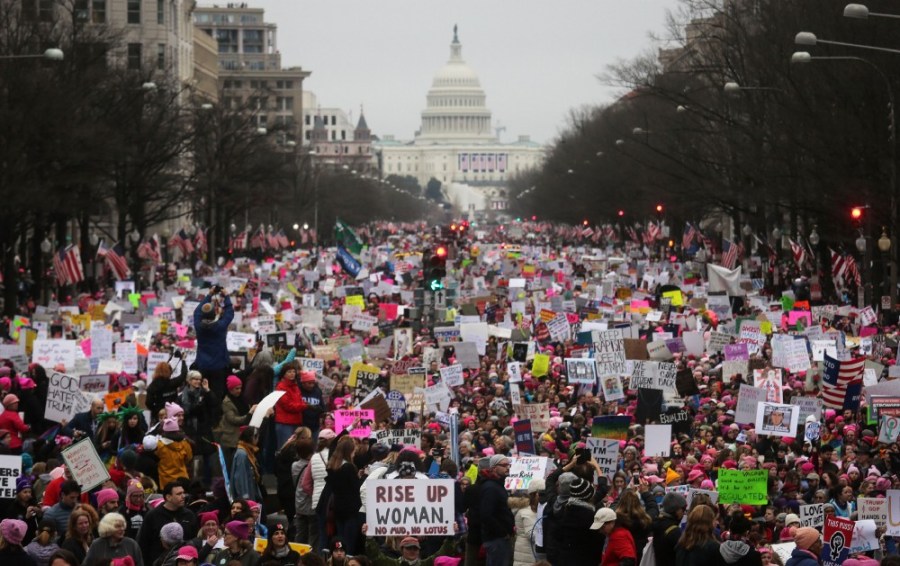
So don’t expect the protesters to go away any time soon.

Because this is what democracy looks like.


What would you do if you didn’t need to work?

Think about it.

What if you were given enough money every year to cover your survival needs so you could live modestly.  You would have a safe place to live, enough safe water to drink, enough healthy food to eat, enough clothes to stay warm.  You would have access to health care and not have to worry about how much it costs.

You don’t have to work to get money to survive – so what would you do?

What is the role of work for you in your life?

Do you believe – as many do – that people who don’t work are lazy?  But what if they don’t have to work, are they still lazy?

For you , what do you need to be doing to make you feel like you are fulfilling your purposes for being here?

As we embrace the world that technology makes possible, including one that could end poverty if we decide that we should, how do you think about what it means to ‘work’?

If you suddenly did not need to work anymore, would you?  And if you didn’t, what would you be doing each day?  Have you thought about it?

What if there were places where you could go to collaborate with others on inventing something new or researching something to enhance our understanding or just to learn something new? Would that be your preference?

And if someone else decided to spend their days writing or painting, would you think less of them?

Notice – I didn’t mention how you would have your basic needs covered.

Would it matter to  you how you received your basic income?

Because we are headed to a place where we simply don’t need all the people we have in order to produce enough basics to end poverty for everyone on the planet.

What if we produce a world where everyone starts with enough.  They can choose how they spend their time – what contributions they choose to make.

What if….?